
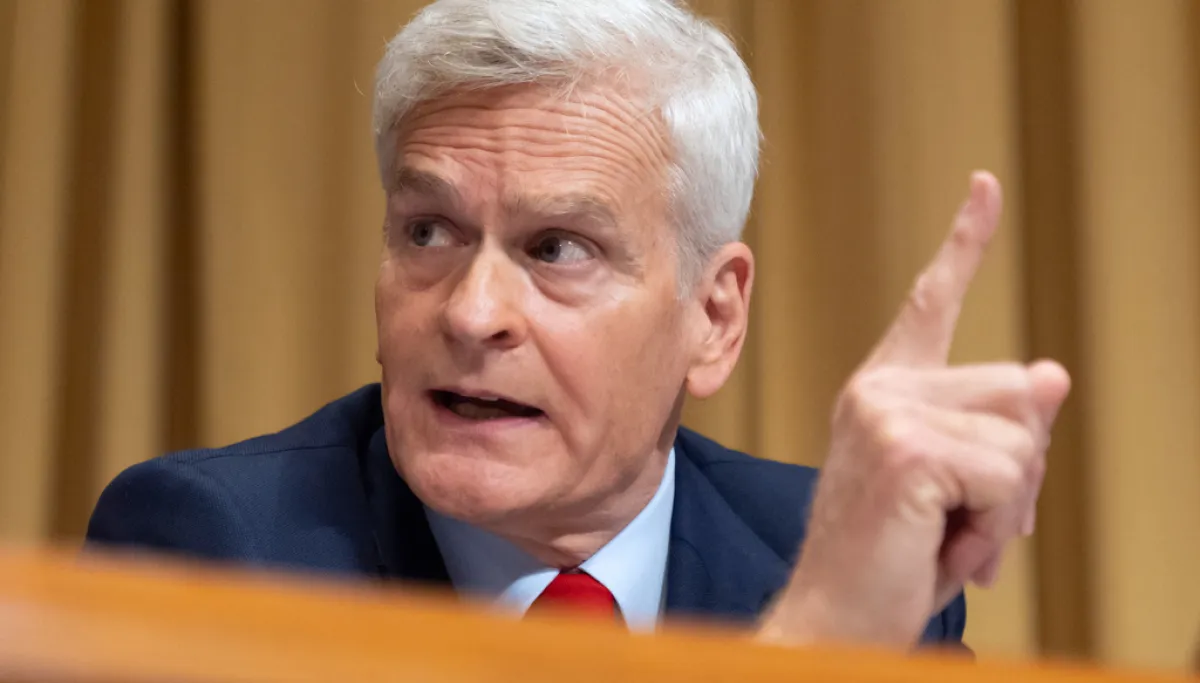
Sen. Bill Cassidy (R-LA) vehemently voiced his disagreement with the Trump administration’s Memorandum of Understanding with Iran, calling it the “worst foreign policy blunder in decades.”
“Reagan is rolling over in his grave,” Cassidy wrote Wednesday. “Iran’s nuclear ambitions were not curbed, and they have learned that threatening the Strait of Hormuz works and will undoubtedly leverage it in the future. Now, Iran gets to build brand-new infrastructure under this deal.”
“Before the war, the strait was open, Iran was being crushed by sanctions, and 13 service members were still alive. Now, 13 Americans are dead, families have paid billions at the pump, sanctions will be lifted, and the bombing has stopped. This is the worst foreign policy blunder in decades,” he concluded.
READ IN FULL: THE 14-POINT PEACE AGREEMENT WITH IRAN
The White House read the full text of the deal with Iran to reporters on a call Wednesday, though have not yet released the official document.
The readout outlined 14 points included in the deal. The U.S. agreed to lift its sanctions on Iran, and its naval blockade in the region as well. Iran agreed to allow ships to transit through the Strait of Hormuz freely, and said it “shall not procure or develop nuclear weapons.”
They also outlined what has yet to be agreed to, including “the issue of enrichment,” which the deal says will be figured out in the next 60 days.
Most controversially, the U.S. will work with “regional partners” to supply Iran with $300 billion for reconstruction after the war. The White House previously pushed back on reports the U.S. would pay Iran the full sum. Details about the payment are expected within 60 days.
Other Republicans have reacted to the deal, including Sen. Lindsey Graham (R-SC), who has been pushing a hardline position on the Iran war. He struck a more positive tone about the agreement than Cassidy.
TRUMP’S VERY PUBLIC INNER DIALOGUE ON IRAN
“I just had a very lengthy and productive discussion with [Special Envoy Steve Witkoff] about the state of play regarding Iran,” Graham posted Wednesday afternoon. “After this discussion, it is my opinion that signing the MOU will be beneficial to the United States, in as much as the Strait of Hormuz will begin to open, and the hostilities with Iran will stop.”
“Whether or not the United States can reach an acceptable, verifiable deal with Iran regarding its nuclear program and other issues is yet to be determined, but I see little downside to trying,” he continued.


