
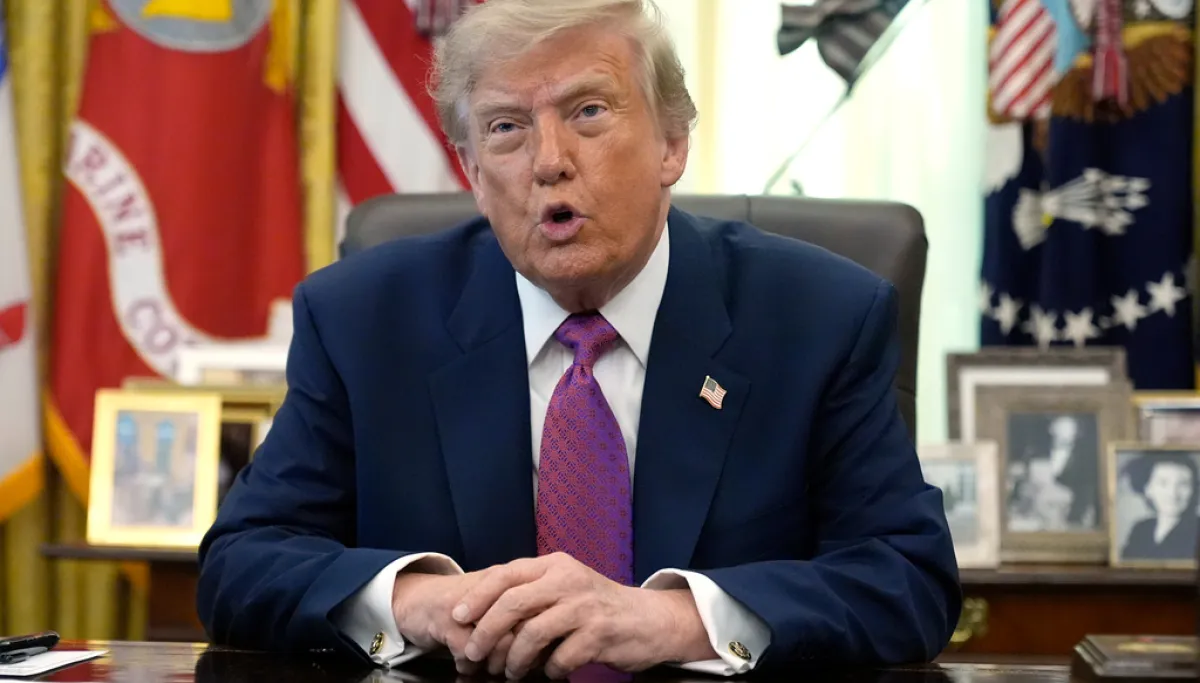
President Donald Trump on Monday pressed Congress to pass federal tax breaks to revive the U.S.’s film industry, after speaking with his “special ambassador” to Hollywood, actor Jon Voight.
Trump revealed he had a “great” meeting with the “fantastic” Voight in a post to Truth Social. The president expressed concern that Hollywood is losing ground to Canada and other countries, and argued new federal tax incentives could bring the industry back to California. The amount of funds spent on tax breaks for the film industry to bring back “entertainment jobs” will be made up “tenfold by the money pouring into” the Treasury Department’s coffers, Trump claimed.
“I am going to suggest that Republicans and Democrats get together, and immediately craft Legislation to save the Movie, Television, and Entertainment Business in America. Congress should approve, immediately, a Federal Production Incentive to create Entertainment Jobs in America,” Trump said.
“Meetings are being set up with the Leaders of both Parties in order to get this done. It should be Bipartisan, especially since so much money is being lost in California, and other largely Blue States,” he added. “It can be done quickly, accurately, efficiently and, importantly, will benefit ALL of America. What we watch on the Silver Screen should be made in what was once the Movie and Motion Picture Capital of the World. Let’s get this done!”
Members of Congress are working on legislation that could be introduced as soon as September, Politico reported over the weekend. The federal production incentive being discussed would be stackable atop states’ incentives, and include a 20% credit for labor both in front of and behind the camera, with a mechanism requiring that the vast majority of the work would go to U.S. personnel, according to the outlet.
Before becoming president, Trump had a long background in the entertainment industry, starring in his hit reality TV show The Apprentice and making cameo appearances in several popular films.
Since assuming office, the president has often warned about Hollywood’s struggles, appointing Voight and others to examine what can be done to revitalize Hollywood, and last year threatened to slap a 100% tariff on all foreign-made films.
TRUMP SIGNED AN ORDER TO RENAME LAKE ONTARIO TO LAKE AMERICA — WHAT TO KNOW
Voight has met with Gov. Gavin Newsom (D-CA) over the matter, with a federal tax credit to incentivize production companies emerging as a topic of discussion last June.
“Hollywood is a Complete and Total Disaster! Despite the name, it is getting very little work. There is no incentive to be there, and it is hurting California very badly,” Trump reiterated Monday. “Jon, and many others in the Industry, are suggesting we do Federal Tax Incentives in order to Make our Movie and Television Production Business GREAT AGAIN, perhaps GREATER THAN EVER BEFORE!”
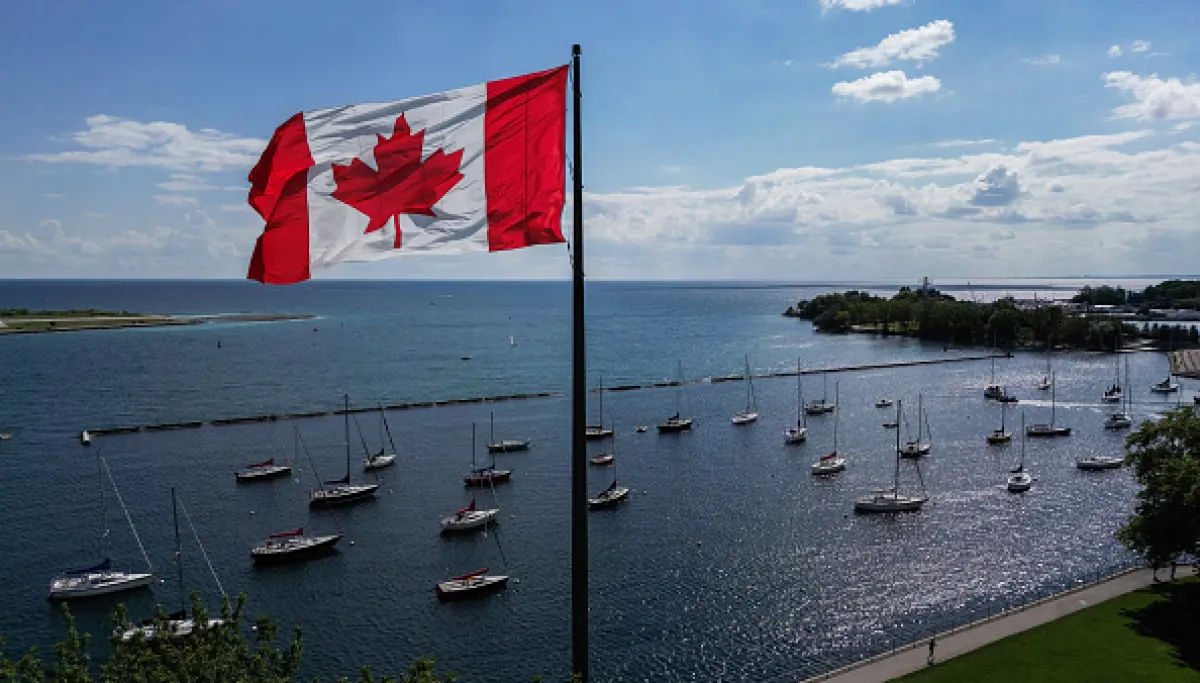
President Donald Trump pressed Apple to update its maps function with his new name for New York’s Lake Ontario, Interior Secretary Doug Burgum said Monday.
During an interview with Fox Business’s Mornings With Maria, Burgum said Trump reached out to Apple directly to request the update after the president signed an executive order renaming Lake Ontario, which lies in both the United States and Canada, to “Lake America.” Only the Lake Ontario name appeared on Apple’s platform as of Monday afternoon, although the label hovered above Canada’s water border.
“I know that the president reached out to Apple directly, so I’m sure that we may be seeing that change coming up soon to Lake America,” Burgum said.
Trump issued the order on Thursday as Canada and the U.S. escalated a burgeoning trade war, complete with tariffs.
The president’s order is binding only on the U.S. government, leaving private companies such as Apple the option of whether to leave the name as is or change it to Trump’s preference.
One of Apple’s chief competitors, Google, made the update over the weekend to Lake America “to reflect name changes in official government sources,” the company said in a statement Sunday.
“These updates follow our long-standing policy for bodies of water with names that vary from country to country,” Google’s statement said.
TRUMP SIGNED AN ORDER TO RENAME LAKE ONTARIO TO LAKE AMERICA — WHAT TO KNOW
Apple Maps has been slower than Google in the past to make similar changes triggered by Trump’s decrees, including when he renamed the Gulf of Mexico to Gulf of America and Mount Denali to Mount McKinley.
The Washington Examiner reached out to Apple for comment.
President Donald Trump reposted a claim Monday that there have been no documented cases of an unvaccinated Amish child being diagnosed with autism, adding to skepticism about public health officials’ claims regarding the measles outbreak in Pennsylvania.
The president’s post on Truth Social consists of a graphic that contends there is not an “explicitly documented” case of an unvaccinated Amish child with autism, citing a 2010 study.
Traditional Amish communities have been subject to intense scrutiny because vaccination rates, particularly for the measles, mumps, and rubella or MMR vaccine, remain low in Amish communities and some Mennonite groups.
Trump’s post cites that, across the entire 330-year history of distinct Amish communities in the United States, there has never been a recorded case of an unvaccinated child being diagnosed with autism.
But the claim is highly misleading and unsupported by the evidence cited.
The text of the graphic reads, “Amish + Autism 330 years later … No published case has explicitly documented an unvaccinated Amish child with autism.”
A disclaimer at the bottom of the graphic acknowledges that cases of autism have been documented in Amish children, but clarifies the claim as referring “to the absence of a published case of both autism and zero vaccinations.”
The graphic cites a 2010 study, published by the International Society for Autism Research, that screened 1,899 Amish children for autism and confirmed 7 cases. The study’s findings indicate that, at the time, approximately 1 in 271 Amish children fit the 2010 definition of having autism, compared to roughly 1 in 91 in the general population at the time.
The graphic also says the researchers collected vaccination histories for the children, and the published abstract for the paper “did not report any confirmed case as completely vaccinated.”
The study does not directly support the graphic’s claim that there is no recorded case of “an unvaccinated Amish child with autism.”
Researchers collected the vaccine histories of the children involved in the study, but the version of the research paper referenced in the graphic does not link the Autism Spectrum Disorder screening results to each child’s vaccination status.
In other words, the study does not say whether the children diagnosed with autism were vaccinated or unvaccinated.
Further, the study does not support the claim that there has never been a confirmed case of an unvaccinated Amish child with autism because the study examines only a segment of time.
Researchers surveyed Amish children screened in Ohio and Indiana in 2008 and 2009 and did not examine the entirety of Amish history. The data in the study are also not representative of the 16 years after its publication in 2010.
The White House did not respond to the Washington Examiner’s request for additional studies to support the claim of the social media post.
Adam Omary, psychologist and biostatistician for the libertarian Cato Institute, told the Washington Examiner the most likely reason for a difference in autism diagnoses among the Amish compared to the general population is due to genetic differences within the Amish community, rather than an environmental exposure.
“There is no reliable evidence of any environmental exposures—vaccines or otherwise—causing autism,” Omary said. “The single biggest risk factor is family history.”
Omary has focused his research on how the expansion of diagnostic criteria in the 2014 DSM-5, the official mental health diagnostic manual, has led to milder forms of autism receiving a formal diagnosis of ASD than in the past.
The study cited by Trump, published before the new definition of ASD from the DSM-5, used the older and more conservative diagnostic criteria. Omary says this switch in diagnostic criteria contributes to what appears to be rising autism rates over time.
“Even if the underlying psychology or symptomology of a population is unchanged, more conservative screening will produce lower prevalence estimates and more expansive screening will produce higher estimates,” Omary said.
Trump’s Truth Social post is not the first time that the president has made a connection between low vaccination rates and low autism rates among traditional Amish communities.
During a press conference in September 2025 on the risk of causing autism by taking Tylenol while pregnant, Trump made multiple comments that multi-virus vaccines can cause autism and that unvaccinated Amish children do not have autism.
“I think I can say that there are certain groups of people that don’t take vaccines and don’t take any pills that have no autism — that have no autism. Does that tell you something?” Trump said last year.
Trump during the event went on to say, “The Amish, as an example, they have essentially no autism.”
Trump has also been a vocal critic of the MMR vaccine, calling it “lethal” during an Oval Office event in August announcing a reduction in the number of recommended childhood vaccines. He has also called on pharmaceutical companies to “break up the shot,” creating three separate vaccines for measles, mumps, and rubella.
Trump’s post comes amid a sweeping measles outbreak across Lancaster County, Pennsylvania, home to the largest Amish community settlement in the U.S.
The outbreak has drawn national attention following a dispute over vaccine misinformation between Gov. Josh Shapiro (D-PA) and Health and Human Services Secretary Robert F. Kennedy Jr., who in the past has supported the debunked claim that vaccines cause autism.
Shapiro and the Pennsylvania Department of Health last week announced two measles-associated deaths in Lancaster County, sparking an intense dispute over whether the cause of death for the two reported individuals was indeed measles.
The Lancaster County Coroner reported last week one of the deaths was of a newborn infant, whose immediate cause of death was a lacerated spleen that the coroner concluded was not caused by a measles infection.
The infant’s mother, an unvaccinated Amish woman, had a severe case of measles during the last weeks of her pregnancy and had a difficult home birth as a result. The cause of death for the infant is being debated among physicians online.
According to the nonprofit Association of Immunization Managers, the MMR vaccination rate in Lancaster County is roughly 87%. Only an estimated 25% of the Amish settlement in the county is vaccinated against measles.
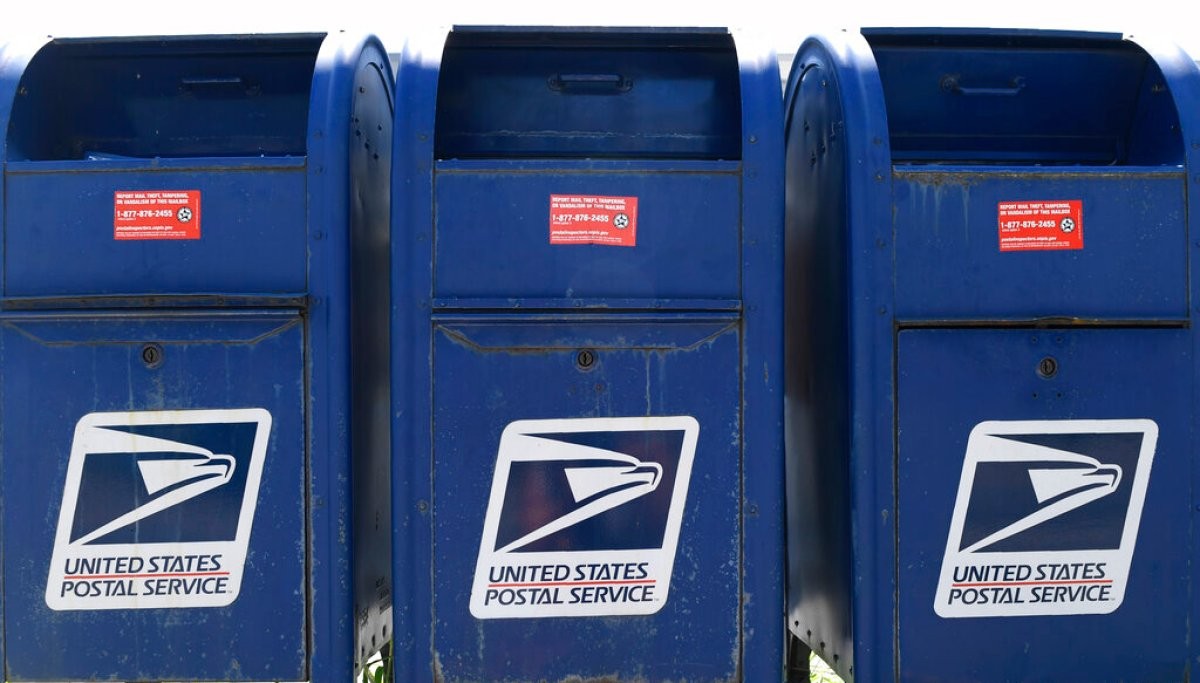
A federal judge on Monday denied requests from the Trump administration and Republican-led states to lift a temporary block on key parts of a U.S. Postal Service rule implementing President Donald Trump’s executive order intended to secure federal elections.
U.S. District Judge Indira Talwani, an appointee of former President Barack Obama, left her 14-day temporary restraining order in place as the administration pursues an appeal before the U.S. Court of Appeals for the 1st Circuit. Talwani has scheduled an expedited hearing on Thursday over whether to impose a longer-lasting preliminary injunction.
The Justice Department notified the district court on Friday that it was appealing Talwani’s temporary block, which she issued Thursday. The administration and Republican-led states then asked Talwani to pause her order while the appeal proceeds.
Talwani denied those requests on Monday, concluding that the temporary restraining order was unlikely to be immediately appealable because it lasts only 14 days and the court has established an expedited schedule for considering a preliminary injunction.
“Although Defendants and Intervenor-Defendants seek a stay ‘pending appeal,’ the TRO is not an appealable order” under federal law when it remains in effect for only 14 days, and an expedited hearing has been scheduled, Talwani wrote.
The USPS rule establishes ballot-envelope standards and requires state and local election officials to upload and certify voter information through a federal portal before using the mail service for federal ballots. If the rule were implemented, USPS would not deliver ballots from states that decline to share the required information or from states that use envelopes failing to meet the agency’s criteria. The rule is meant to ensure only eligible voters receive ballots.
Talwani again concluded that USPS likely lacked the authority to issue the rule and that the regulation was likely unconstitutional and contrary to law.
She also rejected the DOJ’s interpretation of the Supreme Court’s succinct Aug. 24 ruling in the dispute, calling it “cynical.”
The Supreme Court, in a brief order last week, found that an earlier challenge to Trump’s executive order was premature because USPS had not yet issued a final rule. The Postal Service has since finalized the regulation, prompting states and voting organizations to bring renewed challenges.
“A Final Rule has now issued, and contrary to Defendants’ cynical interpretation, the Supreme Court has not endorsed the view that any challenge to the Final Rule is now too late,” Talwani wrote.
The administration argued that appellate review of the temporary order could otherwise come too late for the Nov. 3 midterm elections. Talwani said that argument misconstrued the Supreme Court’s decision.
The judge also rejected the administration’s characterization of the rule’s requirements as “modest.” She said the regulation conditions state use of USPS for election mail on the agency’s approval of ballot and return envelopes and requires election officials to upload and certify voter information through its portal.
In a filing Saturday, the DOJ argued that the rule imposes limited informational requirements and falls within USPS’s authority to establish special procedures for sensitive mail. The government compared the treatment of ballots to conditions the agency has adopted for items such as cremated remains and replica explosives.
Talwani found that the risks to states and voters weighed in favor of keeping the temporary block in place. She cited declarations from election officials who said full compliance before the midterm elections would likely be impossible and could prevent eligible voters from receiving ballots.
The judge said her order was narrowly tailored and still allows USPS to establish its Ballot Mail Portal and communicate with states about ballot-design standards. States may participate voluntarily, but the agency cannot make compliance mandatory while the temporary order remains in effect.
Talwani concluded that imposing the changes roughly two months before the midterm elections would conflict with the public’s need for “clear and settled” rules of the road.
The renewed legal battle began after USPS issued its final rule earlier this month to implement portions of Trump’s March executive order on election security. Twenty-four states and voting organizations challenged the regulation after it was finalized.
TRUMP ADMINISTRATION APPEALS JUDGE’S SECOND BLOCK ON MAIL-IN VOTING ORDER
Talwani previously blocked parts of the executive order before USPS completed its rulemaking process. The Supreme Court last week found that challenge premature, clearing the way for the agency to finalize the regulation and for opponents to challenge the completed rule.
The 1st Circuit must now confront whether to review Talwani’s short-term order, though it is not clear whether the appeals court will act before her expedited hearing on Thursday. The dispute could ultimately return to the Supreme Court.